



This week, we are highlighting SOS Children’s Villages Armenia, an Aflatoun partner that is making employability feel real for young people in Shirak and Tavush.
Their 2025 work sits on a simple belief: young people do not only need information about jobs. They need space to practise the skills that help them walk into opportunities with confidence. That means learning how to communicate, work with others, set goals, and handle money wisely. It also means understanding how to prepare for the world of work in very practical ways, like writing a CV and showing up strong in an interview.
In 2025, SOS Children’s Villages Armenia shared its annual results for the Aflatoun programme, implemented under a signed memorandum of understanding. A big part of their approach was to build local capacity first, then reach young people through peer learning.
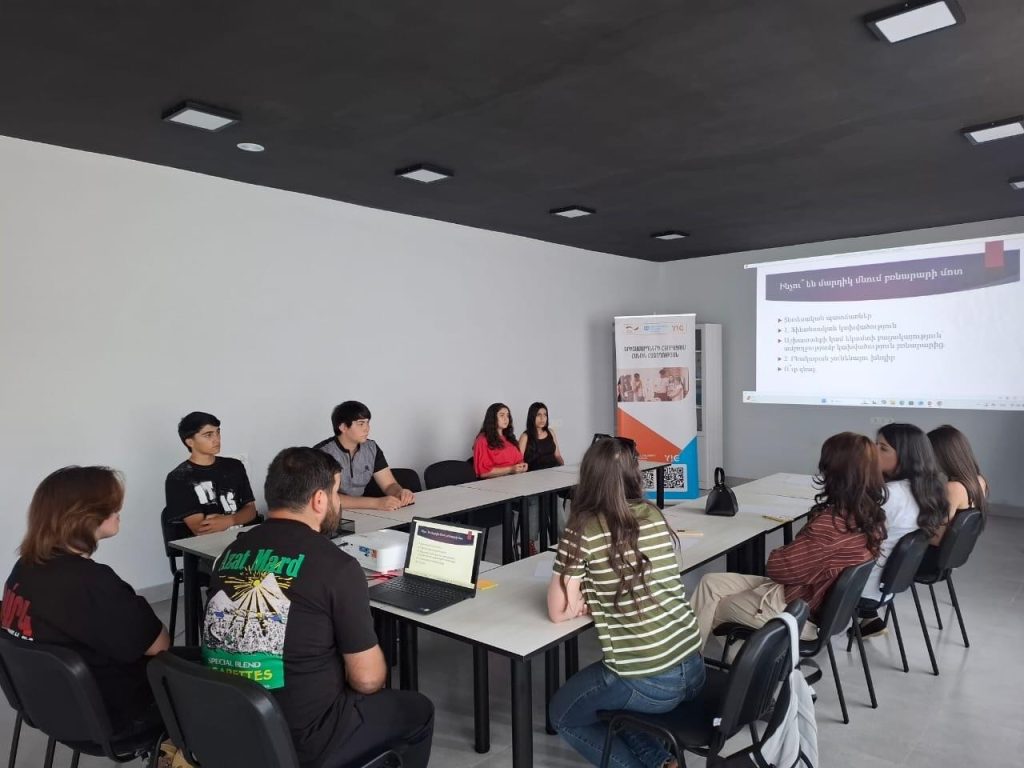
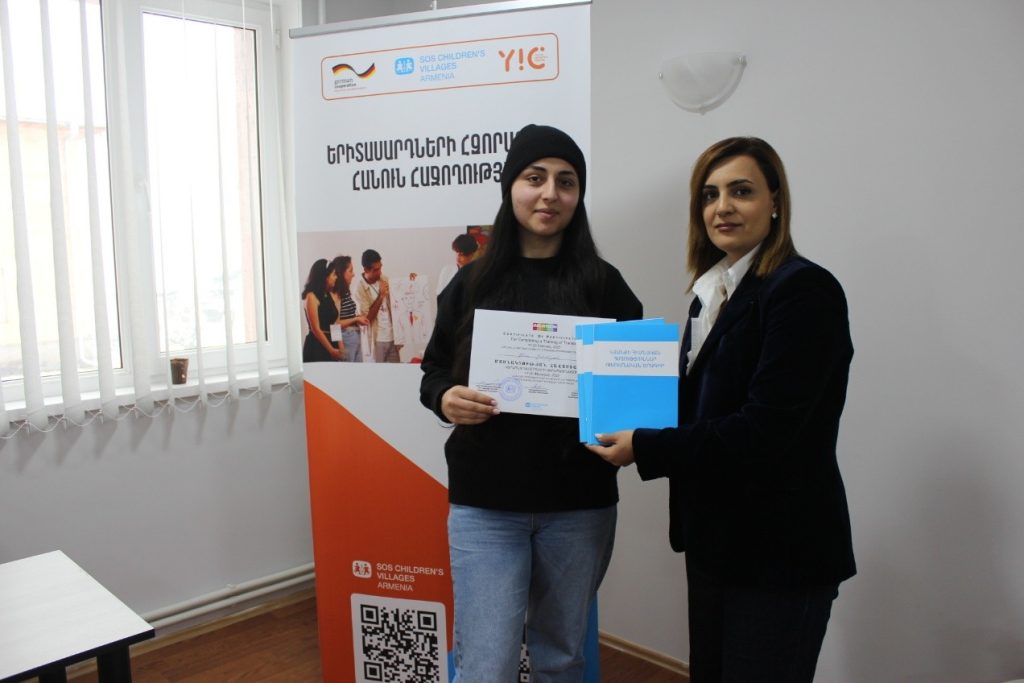
They started with a Training of Trainers course on Aflatoun International’s “Life skills and Employability training program for youth.” The course brought together 52 participants across two regions, Shirak and Tavush. It included 20 representatives from educational institutions, 20 young people, and 12 representatives from civil society organizations. That mix matters, because it creates a shared language between schools, youth groups, and local actors who support young people every day.
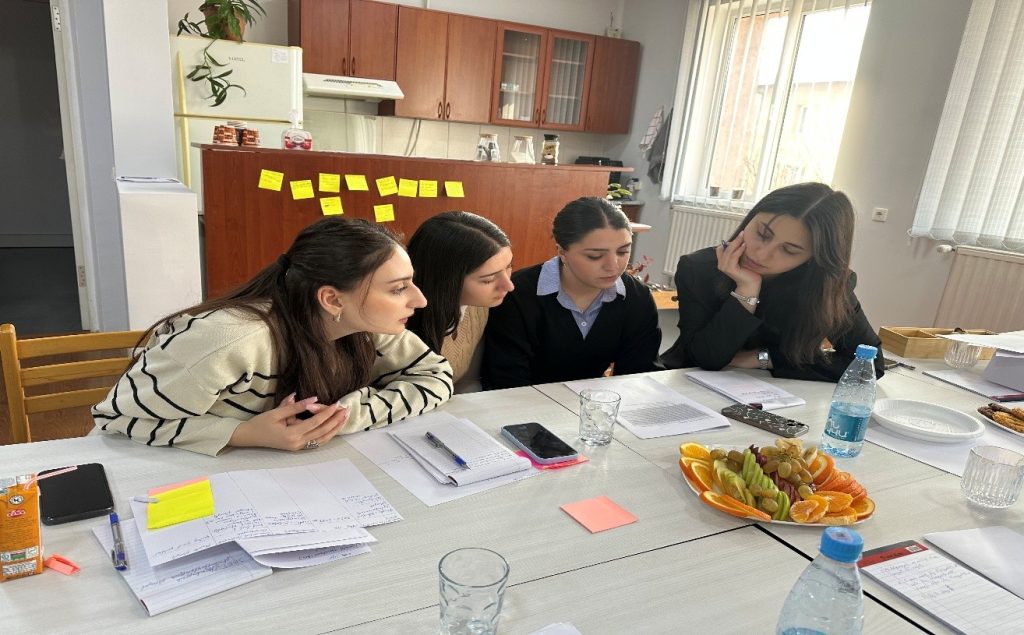
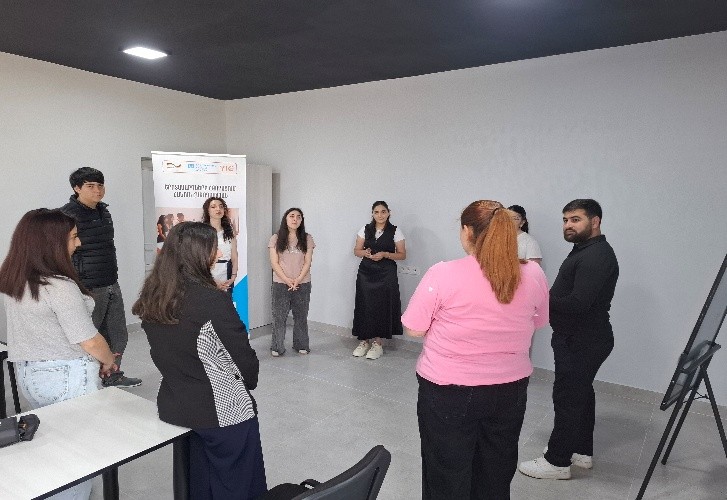
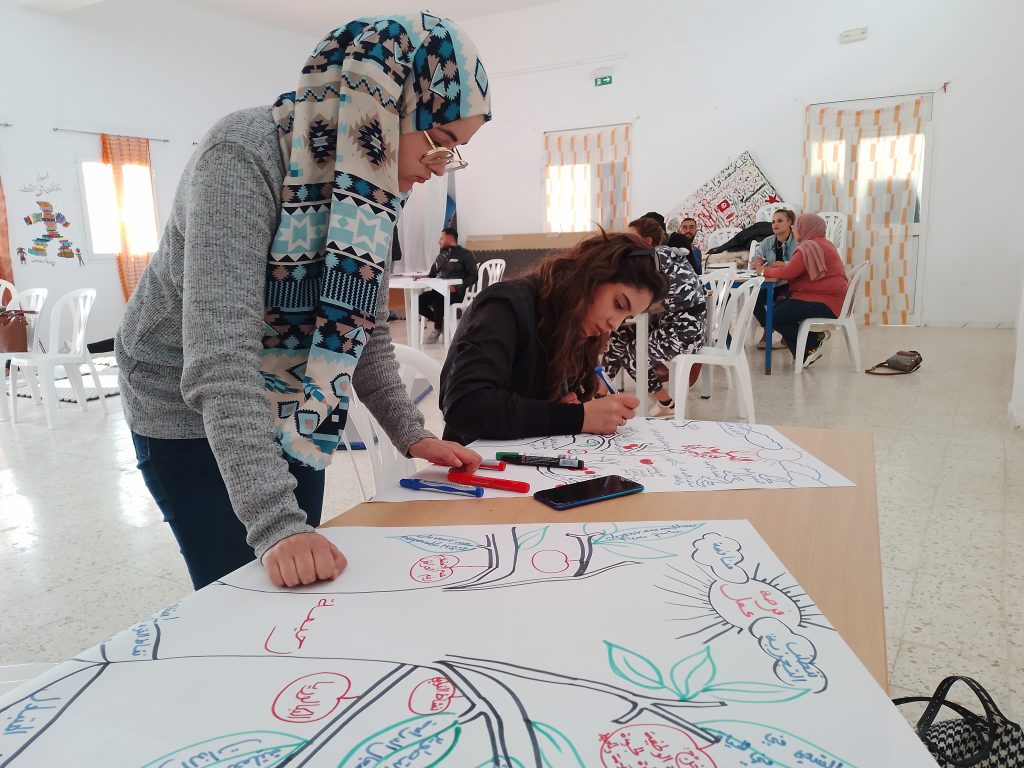
From there, the programme moved into peer-to-peer learning. In 2025, 80 young people took part in the “Life Skills and Employability for youth” peer training course. There were 21 males and 59 females. 54 participants were aged 17–25, while 26 were aged 25–31. The sessions were facilitated by four youth trainers, with two from Tavush and two from Shirak, who had previously completed the Training of Trainers course. Those four trainers delivered sessions to 40 young people in Tavush and 40 in Shirak.
SOS Children’s Villages Armenia describes the sessions as interactive and engaging. Participants also gave positive feedback at the end of the course, saying the skills and employment-related knowledge would support both personal and professional growth.
Numbers like these matter, but the human stories show what they actually mean. Two success stories from 2025 make that clear.
One is Tina Janvelyan, a 23-year-old young woman originally from Koti, a border community in the Noyemberyan region. Tina grew up in a place where calm was often interrupted by the sound of shooting. For her family, safety came first, and her father made the difficult decision to relocate the family to Ijevan, which felt safer.
Relocation can be a fresh start, but it can also be unsettling. Tina had to adjust to a new environment, build new connections, and adapt to a new routine. Still, that move opened new doors. She enrolled at Ijevan State University, and it was there that she learned about Aflatoun International’s “Life skills and Employability for youth” training programme.
Tina joined because she was curious and eager to learn. Yet at the beginning, she felt shy and unsure of herself. She found it hard to express her opinions openly, and even harder to speak about her abilities with confidence. That is a familiar feeling for many young people, especially when they are stepping into spaces that demand self-belief.
Over time, the training environment helped her shift. With supportive sessions and guidance from trainers, Tina began to recognise her strengths. She worked through the inner fear that makes many people stay quiet even when they have something valuable to say. As she progressed, she built key skills, including communication, self-confidence, and teamwork.
After completing the course, Tina felt ready to enter the labour market with a different mindset. She attended several job interviews and was able to present herself clearly and confidently. That confidence was not only a feeling; it showed up in how she spoke, how she carried herself, and how she explained her abilities. Her effort paid off. Tina was selected for a position as a Specialist in the Human Resources Management, Documentation, and Public Relations Department of the Tavush Regional Administration.
Today, Tina says that without these training courses, she would likely still feel restrained and hesitant to take on new initiatives. For her, the programme was not just about employability skills. It was about unlocking her inner potential and moving forward with confidence toward professional growth.
The second story is S.T., a 25-year-old young man from Tsoghamarg village in Shirak. S.T. did well in school and then completed mandatory national service. When he returned home, he carried a strong sense of responsibility, but he also faced a tough reality. Because of socio-economic challenges and the needs of a large family, he spent many of his early adult years doing agricultural work to support his household.
Even while working hard, S.T. felt he was falling behind in his personal development. When he learned about the “Youth Empowerment for Success” programme, he felt his hope return. He joined with a clear intention: to grow his knowledge and communication skills.
What stands out in S.T.’s story is what happened next. As he grew, he began sharing what he learned with other young people in his community. The programme did not only change what he knew; it changed how he showed up around others. SOS Children’s Villages Armenia notes that he stood out for his active engagement, his awareness, and his understanding of gender equality, and why it matters not just in his village but across the region.
S.T. is now employed at SOS Children’s Villages Armenia, and he has taken part in many trainings. He describes Aflatoun International’s “Life Skills and Employability” training package as a turning point.
“When I first heard about the program and the trainings, I honestly didn’t imagine they would have such an impact,” says S.T., who joined because people often told him he communicates well and works well with groups. “In the end, I gained essential knowledge and abilities that I didn’t even realize I was missing.”
He links his progress to how he adapted to the learning environment and participated actively in discussions. During the programme, he built practical skills, including goal setting, CV writing, interview preparation, and financial literacy.
“When I attended my first job interview, I felt very confident,” S.T. adds. “I knew how to present myself properly—and I learned that here, through the program.”
Taken together, Tina’s and S.T.’s stories underline something important. Training can be “successful” on paper, but it becomes meaningful when it shifts how a young person sees themselves. Confidence, communication, and preparedness are not soft extras. They are the bridge between potential and opportunity.
SOS Children’s Villages Armenia is also looking ahead. In Q1 2026, the partner plans to organise another Training of Trainers course on the same Aflatoun programme, this time for 12 representatives of the Unified Social Services. That step is strategic. It helps move these skills closer to systems that support young people at scale, beyond one project cycle.
If you had to sum up their work in a sentence, it would be this: SOS Children’s Villages Armenia is helping young people practise their future before they step into it. And in a labour market that can feel intimidating, that kind of preparation is a gift that stays with you.