

Global Money Week 2026 showed the strength of the Aflatoun movement in real time.
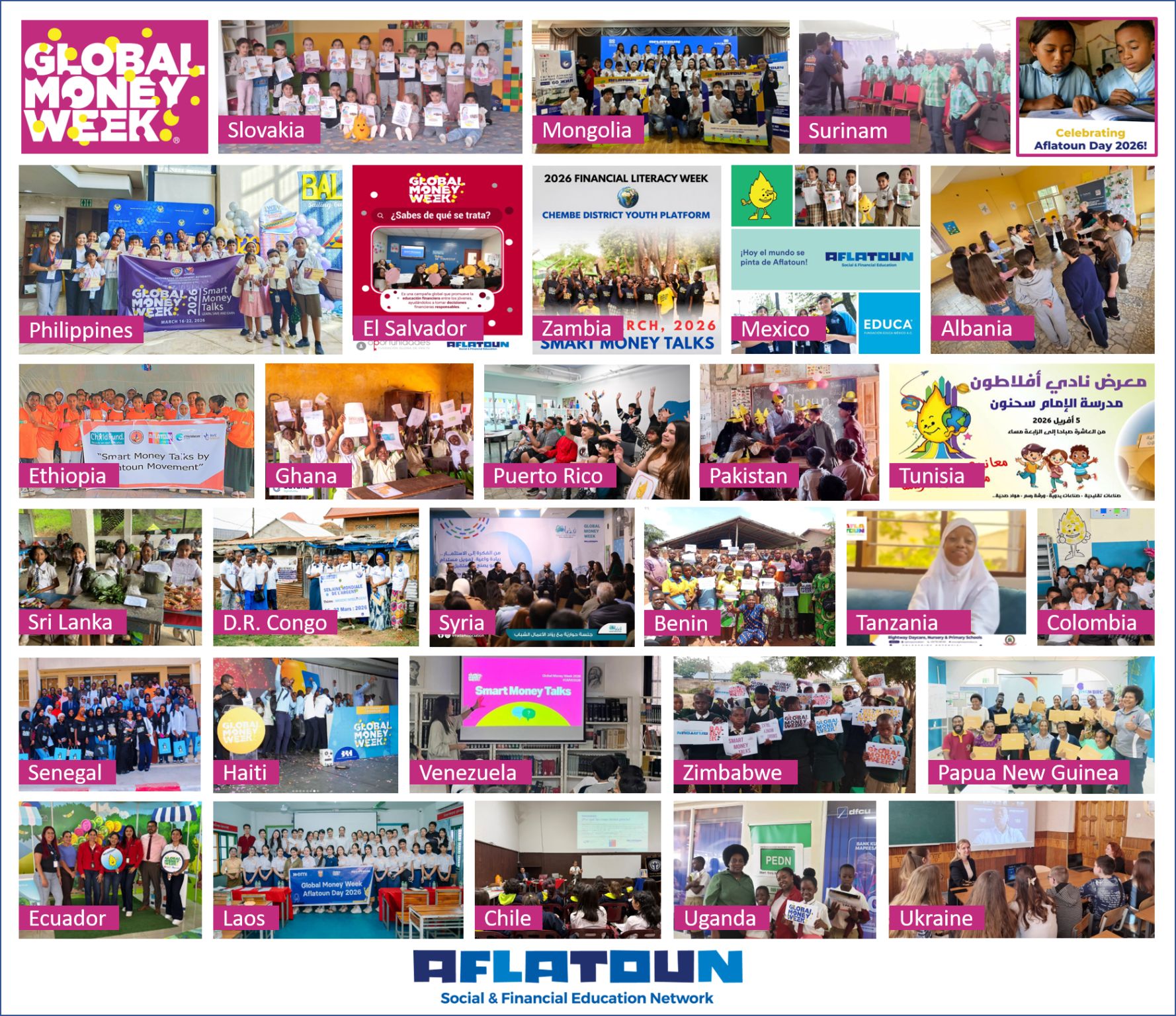
Across one week of exchange, learning, and celebration, 2,840 children and young people joined Aflatoun’s global calls, with participation from 80+ partners across 40+ countries. Those numbers matter. But what made the week stand out even more was what young people shared: practical ideas, real businesses, careful saving habits, and a growing ability to question financial advice before trusting it.
This year’s Global Money Week was not just a campaign moment. It was a window into how social and financial education is taking shape across classrooms, youth groups, community spaces, and online exchanges around the world.
A global movement, grounded locally
From Kenya to Ukraine, from Sri Lanka to Guatemala, young people showed that financial education becomes most meaningful when it is linked to daily life.
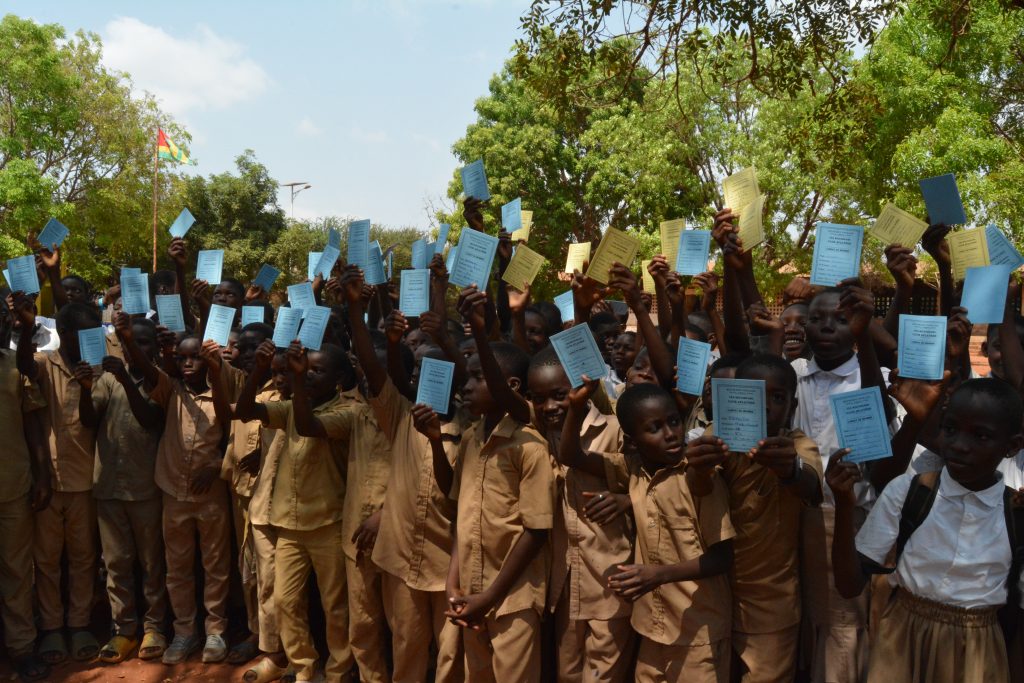
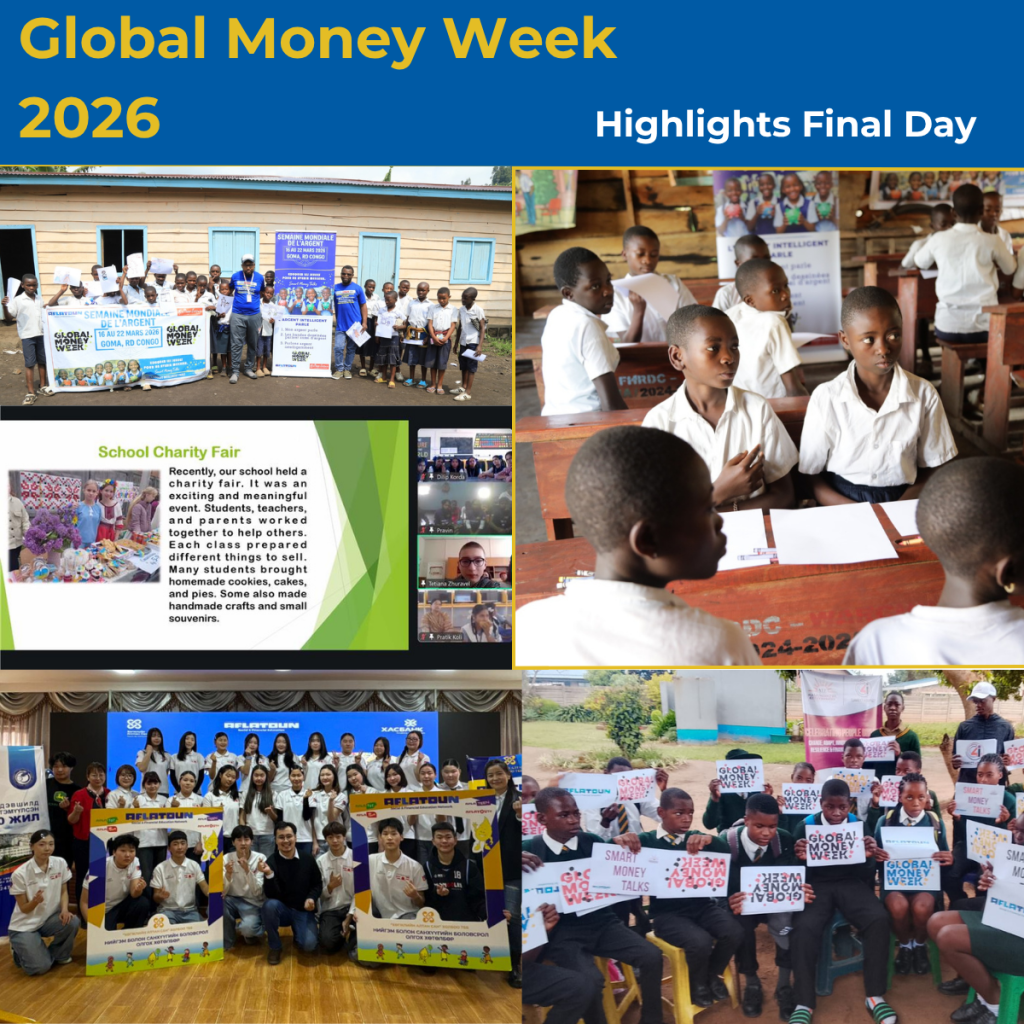
In Kenya, girls from Girl Child Network described how they make and sell bracelets, then save the profits for an end-of-year educational tour. In Uganda, children shared lessons on budgeting and saving for both present needs and future plans. In Zimbabwe, students explained how they had moved from buying vegetables to planting their own and saving money. In the Democratic Republic of the Congo and Benin, young learners spoke about using what they learned to buy school shoes, uniforms, schoolbags, and pens.
These examples show that financial education is not abstract. For many children, it is directly tied to school, family, responsibility, and hope.
Learning by doing
One of the clearest messages from the week was that young people learn best when they can practice what they are taught.
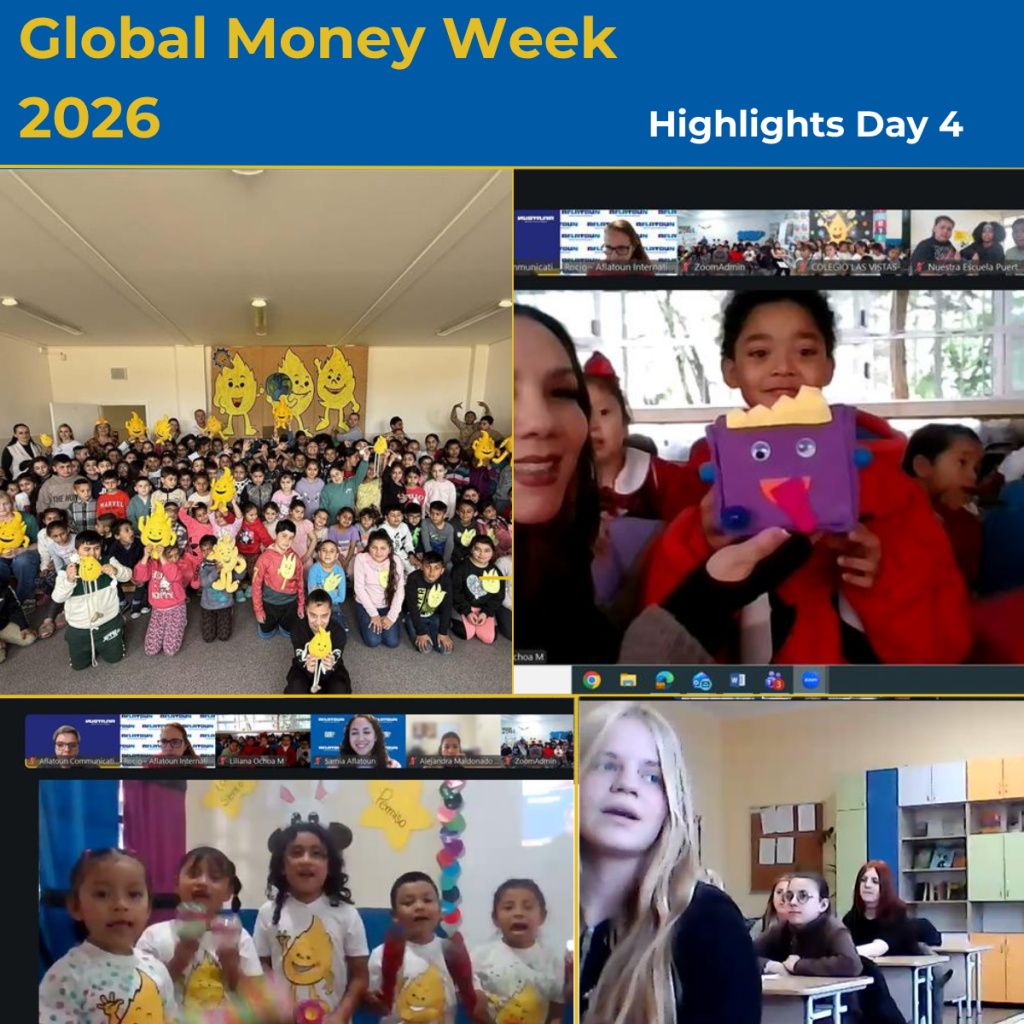
In Indonesia and Sri Lanka, participants spoke about class markets, drawing competitions, music, and group challenges that make learning about money engaging and memorable. In Guatemala, children proudly presented recycled piggy banks, cooking projects, school markets, and small ventures that helped fund uniforms, school activities, and even family needs. In Puerto Rico, Mexico, and Venezuela, younger children used art, songs, role play, and handmade money to explore saving, value, and decision-making.
This practical approach is what gives Aflatoun’s model its strength. Children are not only hearing about money. They are handling it, planning with it, discussing it, and connecting it to goals they care about.
Confidence, critical thinking, and community impact
Another clear theme across the week was that financial education is also helping young people build confidence and judgment.
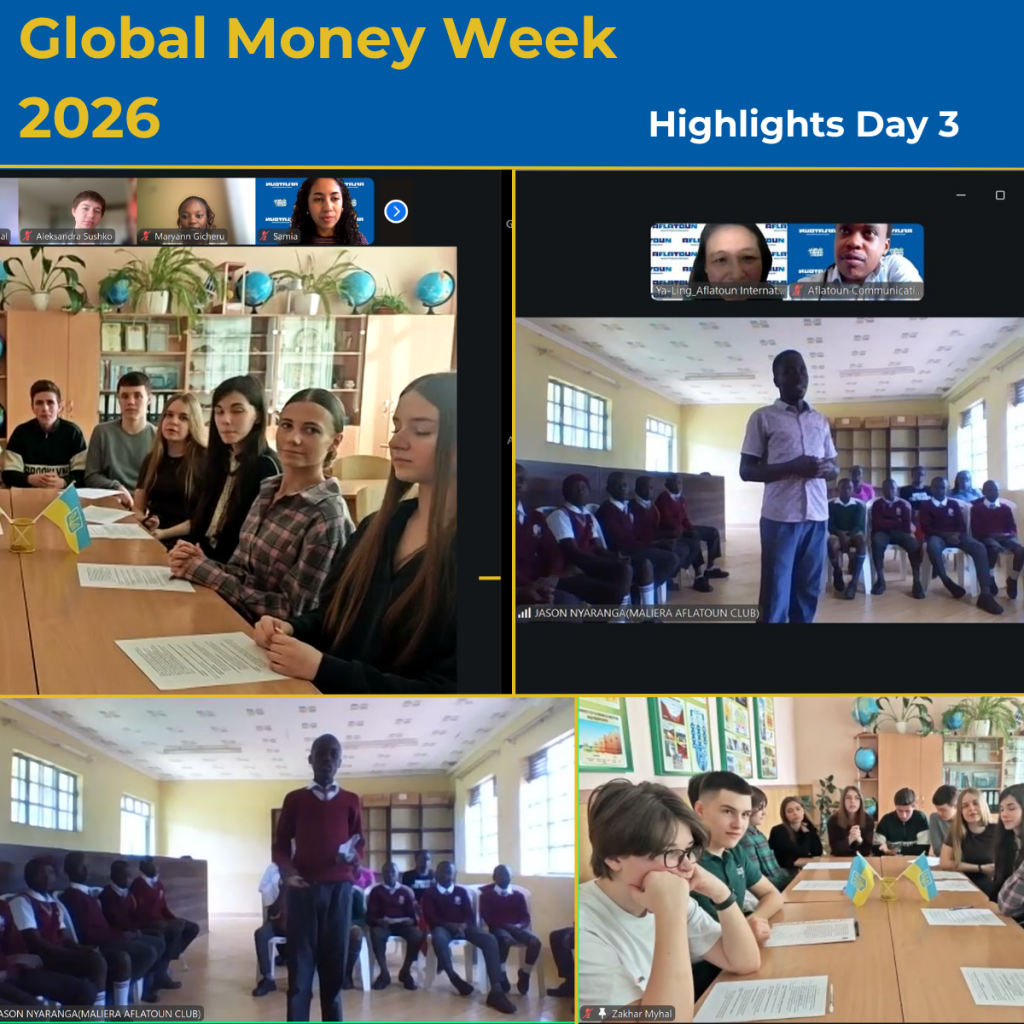
In Ukraine, students shared how they save in bank accounts or safes at home, plan monthly budgets, and think more carefully about what they see on social media. Some reflected honestly that they used to overspend on things they saw online, but now save instead. In Kenya, Uganda, Sri Lanka, and Indonesia, learners and facilitators discussed why young people should not accept financial advice at face value, especially from influencers or unverified sources.
This matters because the theme of Global Money Week 2026, Smart Money Talks, was not only about talking more about money. It was also about talking better, asking questions, and making informed decisions.
The week showed that young people are already beginning to do exactly that. They are learning to question before they trust. They are thinking critically about financial advice. They are becoming more confident in their own financial choices. And they are sharing what they learn with peers, families, and communities.
Youth-led ideas with real results
Many of the projects shared during the week were not small in ambition.
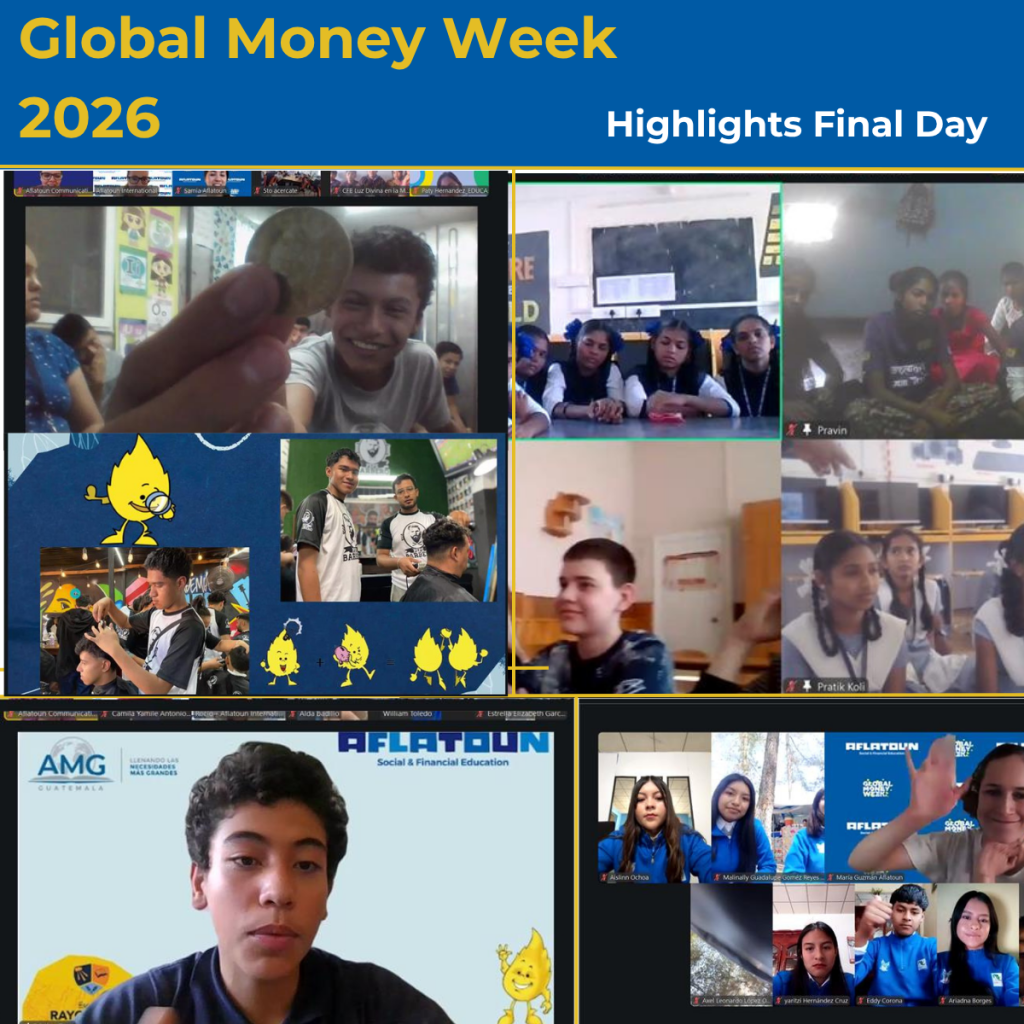
Students in Ukraine spoke about a microgreens social enterprise that supports both learning and local agriculture. In Mexico and Guatemala, teenagers described businesses ranging from lunch delivery and barbering to natural products, recycled bags, herbal teas, and biodegradable materials. In El Salvador, young people spoke with impressive clarity about budgeting, investments, scams, artificial intelligence, debt, and the local financial system.
What linked these different stories was not only entrepreneurship. It was purpose. Young people were using what they learned to improve school spaces, support family members, respond to local problems, and imagine a more stable future for themselves and others.
More than a one-week campaign
The scale of participation this year was important: 2,840 children and young people, 80+ partners, and 40+ countries.
But the deeper story of Global Money Week 2026 is that it captured a much wider truth. Across the Aflatoun network, social and financial education is already helping young people build habits, values, and skills that go far beyond saving and spending. It is helping them plan, reflect, lead, and act.
That is what this movement looks like.
It looks like a learner saving for school supplies in Benin. It looks like girls in Kenya turning creativity into income. It looks like children in Guatemala proudly showing piggy banks made from recycled materials. It looks like Ukrainian students building financial responsibility in a time of uncertainty. It looks like young people in El Salvador asking sharper questions about where financial information comes from and whether it can be trusted.
And it looks like thousands of children and young people, across dozens of countries, learning that money is not just something to spend. It is something to understand, question, plan for, and use with purpose.
The conversation continues
Global Money Week may be over, but the momentum is not.
In the coming weeks, Aflatoun International will continue sharing stories, videos, and reflections through the Voices From campaign, keeping the spotlight on the children, educators, and partners who brought this year’s week to life.
Because if Global Money Week 2026 proved anything, it is this: when young people are trusted with the tools to think critically, plan ahead, and act with confidence, they do far more than learn about money. They begin shaping their future.