






Artificial intelligence is changing how young people learn, work and access information. Yet the skills needed to question, decide, collaborate and act with purpose start developing long before a young person first uses an AI tool.
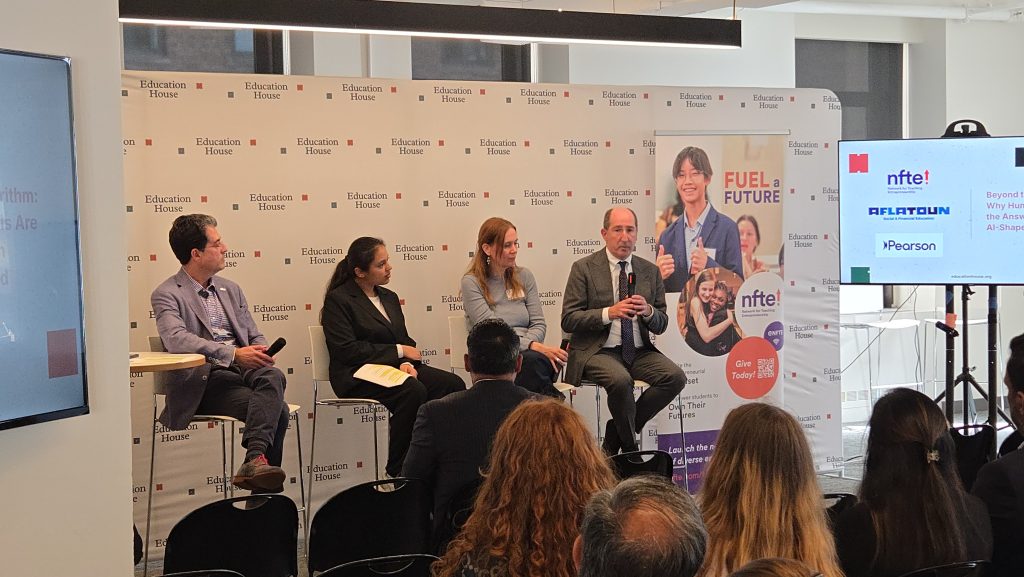
This was the focus of Beyond the Algorithm: Why Human Skills Are the Answer to an AI-Shaped World, held at Education House in New York during the 81st session of the United Nations General Assembly on 22 September.
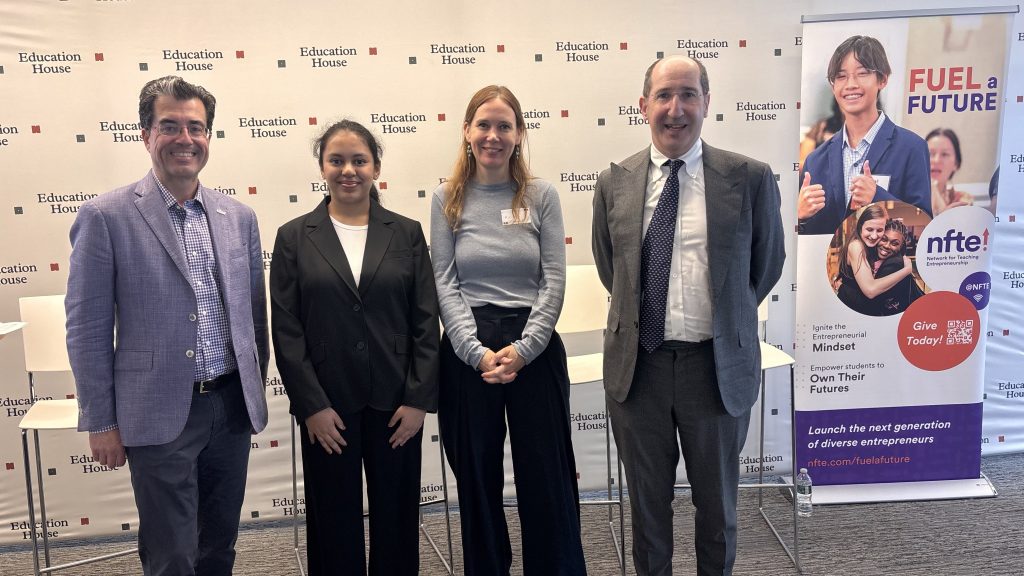
Aflatoun International’s Director of Strategic Partnerships and Development, Kirsten Theuns, joined Arfa Masroor, a student ambassador with the Network for Teaching Entrepreneurship’s World Series of Innovation, and Nich Haber from Pearson Career Ready. The discussion was moderated by J.D. LaRock, Chief Executive Officer of the Network for Teaching Entrepreneurship (NFTE).
The session formed part of Education House’s wider programme on Education for Sustainable Development, which brought together education actors from around the world to consider how learning can help young people meet the challenges ahead.
A conversation shaped by the room
NFTE organised the session as a fishbowl discussion. This format invited educators, employers, nonprofit leaders and young people in the audience to join the conversation directly.
The discussion examined the human skills that young people need in an AI-shaped world. These include critical thinking, initiative, collaboration, judgement and the confidence to explain and defend an idea.
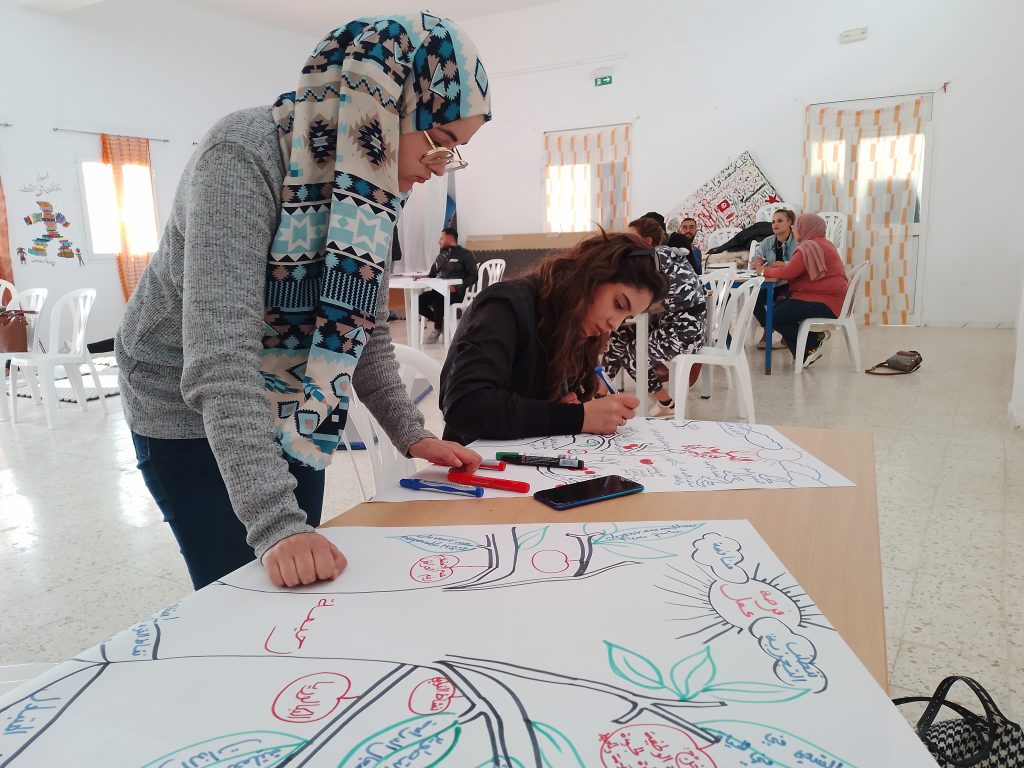
NFTE’s World Series of Innovation offered a practical example. Through the programme, young people work on real-world challenges linked to the Sustainable Development Goals. They develop ideas, solve problems and strengthen skills that support economic opportunity and active citizenship.
Skills begin early
Kirsten shared Aflatoun’s experience of supporting children and young people through Social and Financial Education.
She highlighted that agency begins early. A young child’s ability to weigh a choice, understand consequences and recognise that they can make decisions develops through small, repeated experiences over time.
For Aflatoun, these foundations can begin from the age of three. Waiting until secondary school to introduce decision-making, confidence and critical thinking risks leaving young people without skills they need to navigate a changing world.
Who is missing from the conversation?
Kirsten also raised an important question: who is absent from many discussions about AI and education?
AI conversations often assume that children have devices, reliable connectivity and adults who can guide them. Many children do not have these conditions.
Across Aflatoun’s network, children and young people learn in low-resource, informal, rural and refugee settings. Their perspectives and realities must shape the discussion. Without deliberate action, rapid changes in technology can deepen existing inequalities.
Building the response together
Aflatoun is developing its own approach to AI alongside partners and young people. Their insight is essential in understanding where technology can support learning, where risks need attention and which skills deserve continued investment.
The conversation at Education House showed why this work matters. Young people need space to ask questions, make choices, work with others and turn ideas into action. These skills help them engage with AI thoughtfully and shape the future on their own terms.