







Montenegro puts financial skills on the timetable
This week, we are shining a light on our partner: Bureau of Education Services, Montenegro. Together, we are helping bring financial literacy and social entrepreneurship into classrooms in a way that can last.
After signing a Memorandum of Cooperation with Aflatoun, Bureau of Education Services also signed a second cooperation agreement with the Central Bank of Montenegro. These memoranda represent the foundation for the development and institutionalisation of activities aimed at strengthening the financial knowledge, skills, and entrepreneurial competencies of children and young people in Montenegro.
In cooperation with the Central Bank of Montenegro, a two-day training programme for teachers in the field of financial literacy and social entrepreneurship was developed. The programme was accredited and adopted by the National Council for Education, thereby ensuring its formal implementation within Montenegro’s education system.
In parallel with the development of the training programme, a dedicated webpage was created on the website of the Institute for Education, providing teachers with access to relevant information, teaching materials, and additional resources to support the implementation of financial literacy and social entrepreneurship in both curricular and extracurricular practice.
As part of the project, two publications were translated and adapted:
- “Life Skills and Finance – Phase 1”, intended for students aged 13 to 14
- “Life Skills and Finance – Phase 2”, intended for students aged 15 to 16
These publications represent an important didactic resource and are available for download at the following link:
https://www.gov.me/clanak/publikacije-za-nastavnike
Integration of the Programme in Educational Institutions
The selection of educational institutions was carried out strategically, with the aim of covering all three levels of education while respecting the regional principle. Accordingly, the training programme included one preschool institution, one primary school, and one secondary school (gymnasium), ensuring a comprehensive and systemic approach to strengthening the capacities of teachers and educators in the field of financial literacy.
Implementation of the Trainings
- JPU “Irena Radović”, Danilovgrad – Preschool Education
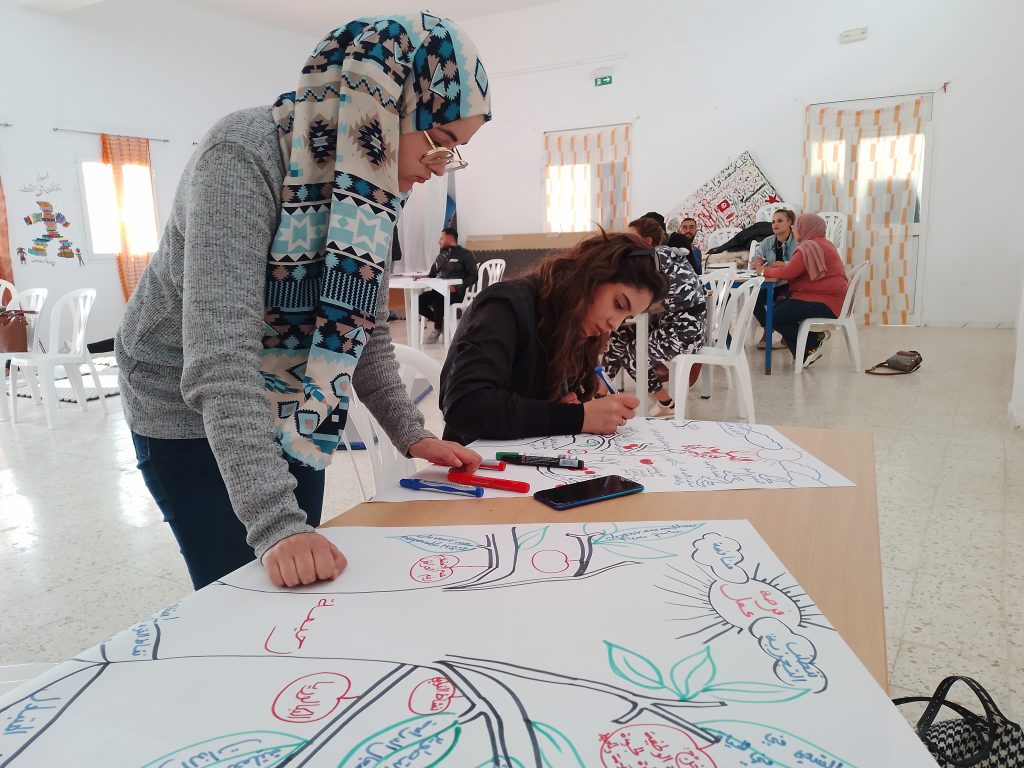
The training was conducted on 4 October and 5 November 2025, over two days, with the participation of 19 teachers/educators (65% of the total staff). The training took place in a highly professional and stimulating atmosphere, with a strong focus on practical activities adapted to working with children of different age groups. Participants demonstrated a high level of engagement, and a significant portion of the activities was implemented independently in the period between the two sessions, after which the results were presented and analysed in detail.
- Primary School “Štampar Makarije”, Podgorica – Primary Education
The training was held on 4 October and 5 November 2025, with 24 teachers (25% of the total teaching staff) from both class and subject teaching, as well as professional associates, participating in the two-day programme. Organisational and technical conditions were of a high standard, and all activities were implemented in line with the predefined agenda. Participants actively engaged in discussions, individual and group work, demonstrating readiness to integrate financial literacy and social entrepreneurship into curricular and extracurricular activities.
- Gymnasium “Miloje Dobrašinović”, Bijelo Polje – Secondary Education
The training was implemented on 24 October and 18 November 2025, with the participation of 17 teachers (60% of the total teaching staff). Throughout both training days, the atmosphere was productive and constructive, characterised by active exchange of experiences, group work, and critical reflection on the role of financial literacy and social entrepreneurship in secondary education.
General Impressions and Results
The developed training programme “Enhancing Financial Literacy and Social Entrepreneurship” is fully aligned with the relevant strategic and regulatory documents in the field of education in Montenegro. In particular, the programme directly aligns with the Education Reform Strategy 2025–2035, in which the integration of financial literacy and social entrepreneurship is recognised as one of the key objectives of the modern education system.
Through the National Curriculum Framework, financial literacy and social entrepreneurship are defined as a cross-curricular theme, mandatory across all levels of education—from preschool to university level. Their integration is based on a holistic approach, which envisages implementation through compulsory subject curricula as well as through extracurricular activities, in line with the developmental needs of learners.
The implemented trainings made a significant contribution to strengthening the competencies of teachers and educators for the systematic and sustainable application of financial literacy and social entrepreneurship in educational practice. Participants successfully acquired the planned knowledge and demonstrated a high level of ability to apply it directly in both curricular and extracurricular activities.
The particular value of the programme lies in its methodological approach, which encouraged active participation, critical thinking, and the exchange of experiences. Group work proved to be an especially effective method, enabling the full engagement of all participants and the development of concrete, contextually adapted ideas. A shared challenge identified across institutions was the need for additional motivation of students and further adaptation of content to different age groups, which provides a solid basis for the continued development of the programme.
All planned objectives and seminar topics were fully achieved. Based on participant evaluations, the average rating of the training across all three seminars exceeds 4.90, confirming the high quality of the programme, its alignment with strategic priorities, and its strong potential for further implementation and expansion within Montenegro’s education system.
The organisation of all trainings, as well as the implementation of the entire programme development and delivery process, was led by Nevena Čabrilo, National Coordinator for Financial Literacy and Social Entrepreneurship.