







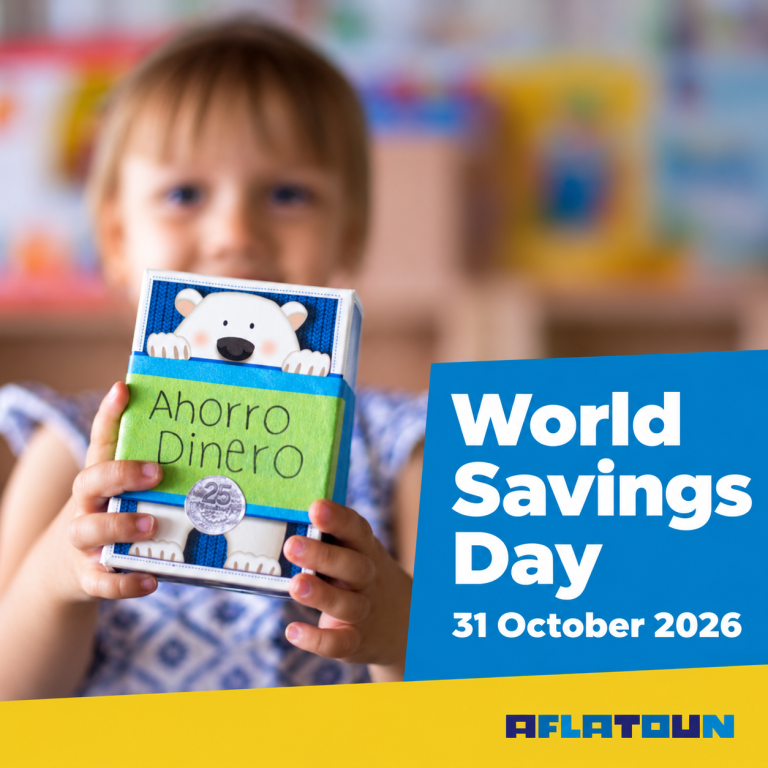
A child saving for a book is practising a decision about the future. The goal gives them a reason to think about what they want and how they might get there.
On World Savings Day, 31 October, Aflatoun International is exploring how children learn to save. Our five-card carousel explains the basics, while stories from across our network show what these lessons can look like in everyday life.
In last year’s World Savings Day article, we reflected on the value of saving as money and payment methods change. This year, we are focusing on the small decisions through which children begin learning that skill.
What saving means for a child
Saving means putting something aside to use later. With money, that might mean keeping a small amount for a chosen goal rather than spending it immediately. A child might draw the goal, record what they have saved and talk about their next step.
Children’s opportunities to save depend on their family circumstances. When there is no spare money, learning can still involve planning with pretend money or caring for resources such as school materials. Every child should have space to participate.
Why early practice matters
Everyday choices give children opportunities to practise planning before they face bigger financial decisions. A simple goal makes saving concrete. Checking progress helps them see how a plan works and when it needs to change.
Adults can support this learning through conversation. Asking what a child is saving for, or helping them draw a plan, makes room for their ideas. The focus is on understanding choices and practising a skill at a pace that suits them.
How Aflatoun supports these habits
Aflatoun’s Social and Financial Education (SFE) approach connects practical money skills with understanding rights, recognising personal worth and taking responsibility. Through active learning and children’s clubs, learners practise setting goals and managing savings together.
The social element matters. Children need confidence to express a preference, listen to others and discuss a shared decision. These experiences help make financial learning relevant to their lives.
Saving in practice
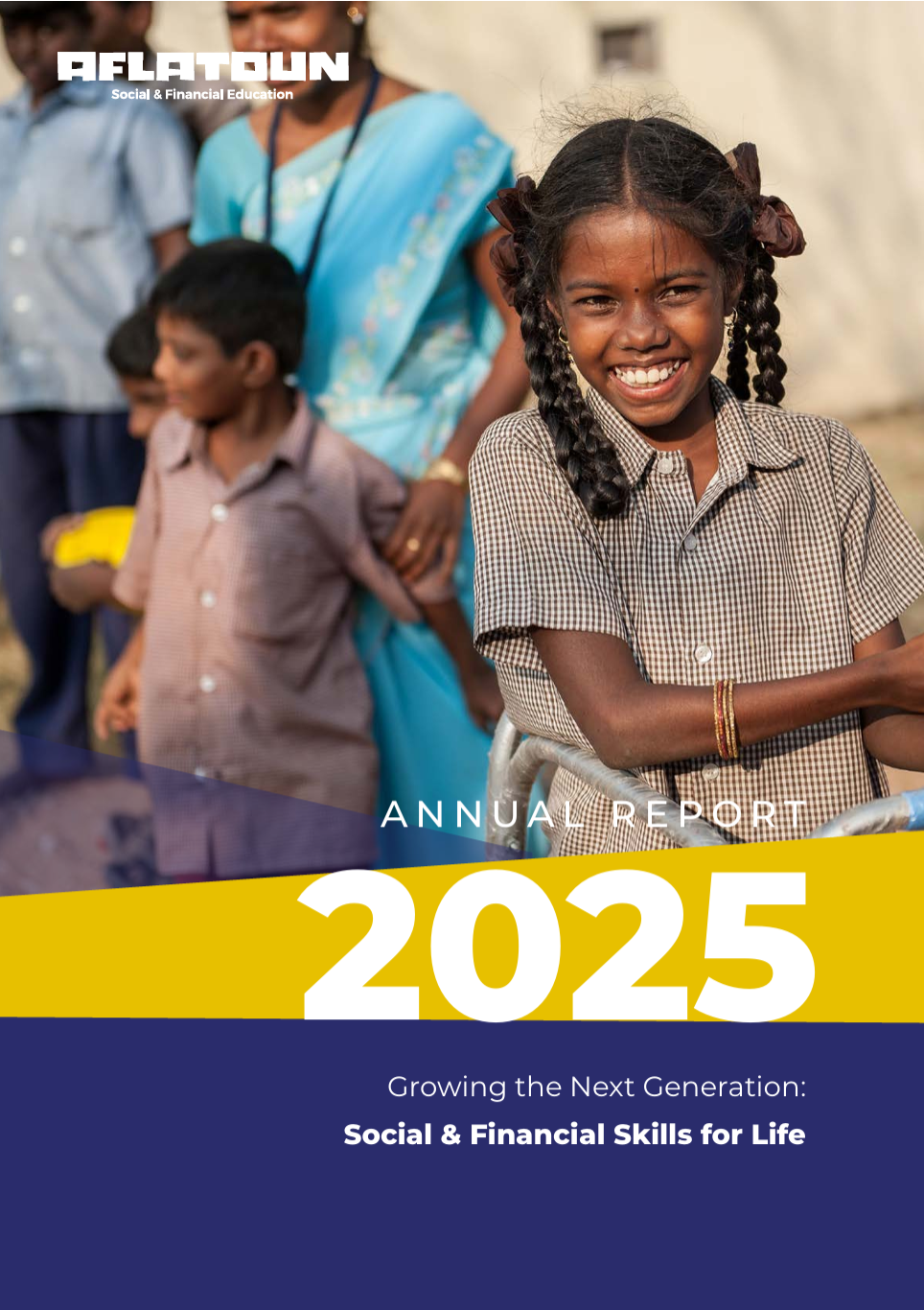
Our 2025 Annual Report records that students in FINCA-Peru’s Aflatoun programme saved 112,438 Peruvian soles together. The programme reached 3,174 students across 40 rural schools.
This is a reported result from one programme. It gives a concrete example of children putting saving into practice alongside lessons about making decisions and planning for their goals.
Stories from our network
In Cambodia, a story shared by our partner CUFA described Vireakseth’s experience at age six. After a financial literacy class using the AflaToun curriculum, he began putting money into his old piggy bank. He proudly shared his new habit with family and friends.
In the Dominican Republic, Asociación para Inversión y Empleo (ASPIRE) shared Kelvin’s experience of training at age 13. He had already been saving for a phone. During the programme, he began thinking about longer-term goals and conserving resources, including water and electricity.
These earlier stories show how children can give saving their own meaning. One learner may enjoy seeing progress towards a first goal. Another may begin thinking differently about the resources they use.
A small activity for today
Invite a child to choose a realistic goal and draw or write it down. Talk together about what reaching it would involve. They could mark each step on a chart and revisit the plan after a week.
If money is part of the activity, let the plan reflect what is available. A child can also practise by looking after materials for a future project. Ask what they learnt and what they would change next time.
This World Savings Day, we would love to hear your experience: what was your first savings goal, and what helped you keep going?